Summary

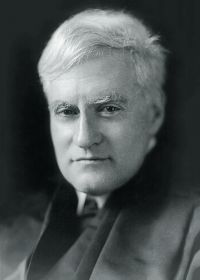
Portrait of Benjamin N. Cardozo Benjamin N. Cardozo Williams v. Baltimore — Opinion of the Court

We are told that the many cases upholding an exemption to a railroad at the time of its formation have no bearing upon this exemption which was granted later on. A charter, so it is argued, is a contract, or becomes one when accepted. There is thus a quid pro quo. A privilege conferred thereafter is nothing more than a gratuity, and hence an arbitrary preference irrespective of its motive. But this is to misread the cases and misconceive the rationale back of them. The charter exemption to a railroad does not gain validity from the circumstance that a charter is a contract.
Source: Wikisource

Portrait of Benjamin N. Cardozo Benjamin N. Cardozo Williams v. Baltimore — Opinion of the Court

Service is likely to be inefficient and even dangerous if operation is continued in the face of an increasing deficit. The state has an interest in seeing to it that railroads shall be run, but an interest also in how they shall be run.
The General Assembly, weighing these and other considerations, has found them adequate to justify a temporary exemption from the burdens of taxation. Nothing in the Constitution of Maryland or in the decisions of her courts enables us to say that there has been a clear abuse of power.
Source: Wikisource

Portrait of Benjamin N. Cardozo Benjamin N. Cardozo Williams v. Baltimore — Opinion of the Court

There is error in the holding of the Circuit Court of Appeals that the statute of Maryland creating this exemption is a denial to the respondents of the equal protection of the laws in violation of the Fourteenth Amendment of the Constitution of the United States.
A municipal corporation, created by a state for the better ordering of government, has no privileges or immunities under the Federal Constitution which it may invoke in opposition to the will of its creator.
Source: Wikisource

Get perspective with Kwize: daily news enlightened by great literature