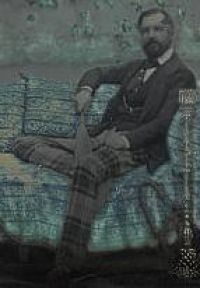
Sir Charles Augustus Murray

Sir Charles Augustus Murray

Summary

Portrait of Sir Charles Augustus Murray Sir Charles Augustus Murray The Prairie-Bird

Thus addressed, Reginald, reading in the dark eyes of his betrothed, feelings kindred to his own, said in a voice of deep and undisguised emotion, “My friends, you will not blame me if I interrupt for a moment the current of your mirth, but it would be doing equal injustice, I am sure, to your feelings and to my own, were we to part without a tribute to the memory of one, now no more, to whose self–devoted heroism Ethelston owes the life of a sister, and I the dearest treasure I possess on earth: The memory of my Indian brother, War–Eagle, late Chief of the Delawares!”
Source: Gutenberg

Portrait of Sir Charles Augustus Murray Sir Charles Augustus Murray The Prairie-Bird

Yet even in the extremity of anguish he forgot not the rude yet high philosophy of his race and nurture; he could not bear that any human eye should witness his weakness, or that any white man should be able to say that Wingenund, the last of the race of Tamenund, had succumbed to suffering. Terrible was the internal conflict; and while it was yet uncertain how it might end, his hand accidentally rested upon his belt, and his fingers closed upon the scalp of Mahéga; instantly, as if by magic, the grief of the loving brother was crushed by the stoic pride of the Indian warrior.
Source: Gutenberg

Portrait of Sir Charles Augustus Murray Sir Charles Augustus Murray The Prairie-Bird

Eagle,” said Reginald, “can you explain this calamity—do you see through it—how has it happened?”
“Mahéga,” was the brief and emphatic reply.
“Do you believe that the monster has murdered all, men, women, and children?” said Reginald, whose thoughts were fixed on Prairie–bird, but whose lips refused to pronounce her name.
“No,” replied the chief; “not all, the life of Olitipa is safe, if she becomes the wife of that wolf; for the others, War–Eagle cannot tell. The Washashe love to take scalps, woman, child, or warrior, it is all one to them; it is enough. War–Eagle must speak to his people.”
Source: Gutenberg

Get perspective with Kwize: daily news enlightened by great literature