Summary

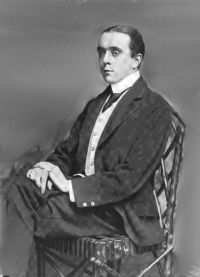
Portrait of Sir Max Beerbohm Sir Max Beerbohm The Happy Hypocrite: A Fairy Tale for Tired Men

But indeed, indeed, I can never be your bride."
Lord George hid his face in his hands.
"Child," said Mr. Garble, "let not the sun rise ere you have retracted those wicked words."
"My wealth, my rank, my irremeable love for you, I throw them at your feet," Lord George cried piteously. "I would wait an hour, a week, a lustre, even a decade, did you but bid me hope!"
"I can never be your wife," she said, slowly. "I can never be the wife of any man whose face is not saintly.
Source: Gutenberg

Portrait of Sir Max Beerbohm Sir Max Beerbohm The Happy Hypocrite: A Fairy Tale for Tired Men

No thoughts came; only his heart burnt hotly. He stood on the brim of Garble's lake, shallow and artificial as his past life had been. Two swans slept on its surface. The moon shone strangely upon their white, twisted necks. Should he drown himself? There was no one in the garden to prevent him, and in the morning they would find him floating there, one of the noblest of love's victims. The garden would be closed in the evening. There would be no performance in the little theatre. It might be that Jenny Mere would mourn him. "Life is a prison, without bars," he murmured, as he walked away.
Source: Gutenberg

Portrait of Sir Max Beerbohm Sir Max Beerbohm The Happy Hypocrite: A Fairy Tale for Tired Men

Centuries ago, Vulcan tired of making so very many masks. And so Apollo sent Mercury down to Athens, to the shop of Phoron, a Phœnician mask-maker of great skill. Phoron made Apollo's masks for many years, and every month Mercury came to his shop for a new one. When Phoron died, another artist was chosen, and, when he died, another, and so on through all the ages of the world. Conceive, my Lord, my pride and pleasure when Mercury flew into my shop, one night last year, and made me Apollo's warrant-holder. It is the highest privilege that any mask-maker can desire.
Source: Gutenberg

Get perspective with Kwize: daily news enlightened by great literature