Summary

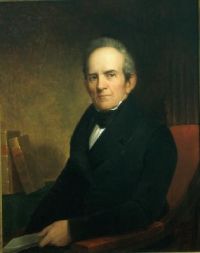
Portrait of Smith Thompson Smith Thompson Harris v. Elliott — Opinion of the Court

On the third point: 'Whether, upon the discontinuance of a highway by the public, in Massachusetts, the soil and freehold of such highway reverts to the owner of the land taken for such highway,' it was argued: that, it is the settled law of Massachusetts, that by the location of a way over the land of any person, the public acquire an easement; but the soil and freehold remain in the owner, although encumbered with a way, and if the way be discontinued, he shall hold the land free from the encumbrance.
Source: Wikisource

Portrait of Smith Thompson Smith Thompson Harris v. Elliott — Opinion of the Court

The inquest of the jury, after particularly describing by metes and bounds, each lot, concludes in each case, as follows: 'Which same tract of land, on our oaths, we appraise and value at _____,' and the act of the legislature of Massachusetts declares, that such parts of the land so valued and paid for by the United States, shall be forever vested in the United States, and shall and may be taken possession of and appropriated to the purposes aforesaid.
Source: Wikisource

Portrait of Smith Thompson Smith Thompson Harris v. Elliott — Opinion of the Court

Upon the first point presented by the counsel for the plaintiff, it is admitted, that the title of the plaintiffs to the freehold, and to the soil covered by the streets, did not pass to the town of Charlestown, or to the United States, holding under the proceedings instituted to obtain the ground used for a navy yard. But, in order to recover in this action, it is necessary that the plaintiffs should show a right to enter on the land, and to possess the same. If the United States acquired a right to use the ground as a navy yard, no such right existed
Source: Wikisource

Get perspective with Kwize: daily news enlightened by great literature