An easement is a legal right that allows for limited use of another's property, often balancing private ownership with communal or statutory requirements. Legal scholars and jurists, from Potter Stewart’s evaluations of compensation for flowage easements to Alexander Wood Renton’s categorization of affirmative and negative easements, have examined its complexities.
Cases such as United States v. Virginia Electric and Power Company highlight methods of valuation, while legislative structures, such as the Agriculture Reform Act, specify acceptable uses within wetland reserves. These viewpoints emphasize easements as both legal mechanisms and practical instruments, facilitating property rights through defined restrictions and compensatory systems.
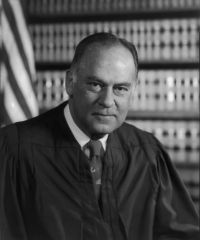 Potter Stewart,
United States v. Virginia Electric and Power Company…
Potter Stewart,
United States v. Virginia Electric and Power Company…