Summary

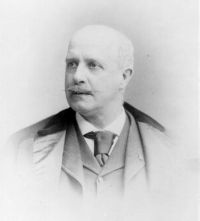
Portrait of George E. Waring George E. Waring Village Improvements and Farm Villages

Cowper's view of the charm of country life as compared with life in the town is a very natural one. The same view suggests itself to every cultivated denizen of the city who finds himself in the country on a beautiful June morning, or under a warm September sun, or during the time of brilliant autumn foliage, or when the sun sets with a warm glow, gilding the clean, bare boughs of November trees, or when the whole countryside is covered with spotless snow, or when grass and leaves and buds and birds first feel the awakening warmth of spring.
Source: Gutenberg

Portrait of George E. Waring George E. Waring Village Improvements and Farm Villages

Nature, as he knows it, shows at times an unattractive side; and he fails to recognize precisely what is meant by Mother Earth as a source of dignity. To him Mother Earth is an exacting parent, calling for constant and regular toil, and whipping him on day by day with weeds to be hoed, dry gardens to be watered, snowdrifts to be shovelled, and an almost endless round of embarrassments to be overcome. As for the purity and simplicity of the farmer's life, he knows very much better than to pin his faith to it.
Source: Gutenberg

Portrait of George E. Waring George E. Waring Village Improvements and Farm Villages

Especially should the use of cast iron be avoided, as being from every point of view, and under all circumstances, whether in the shape of cast-iron dogs or deer, or attempts at the divine human form, absolutely and entirely inadmissible for artistic uses. Better a dug-out log horse-trough, overflowing through a notch in its side, as an ornament to the best-kept village green, than the most elaborate pitcher-spilling nymph that was ever cast in an iron-foundry.
Source: Gutenberg

Get perspective with Kwize: daily news enlightened by great literature