Summary

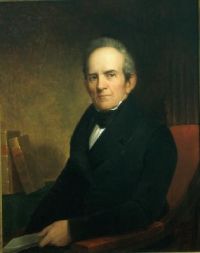
Portrait of Smith Thompson Smith Thompson Jackson v. Chew — Opinion of the Court

But in construing the statutes of a State, on which land titles depend, infinite mischief would ensue, should this Court observe a different rule from that which has been long established in the State.' And whether these rules of land titles grow out of the statutes of a State, or principles of the common law adopted and applied to such titles, can make no difference. There is the same necessity and fitness in preserving uniformity of decisions in the one case as in the other.
Source: Wikisource

Portrait of Smith Thompson Smith Thompson Jackson v. Chew — Opinion of the Court

That the opinion of the Court was, that the devise over to the survivor did not depend on an indefinite failure of issue, but only on a failure of issue at the time of Joseph's death. 'This, then,' said the Chief Justice, 'is the law of the land, and must govern every other case coming within the same principle. And I must be allowed to say, that subsequent reflection has confirmed my conviction of the soundness of the decision in the Court of Errors. Stare decisis is a maxim essential to the security of property.
Source: Wikisource

Portrait of Smith Thompson Smith Thompson Jackson v. Chew — Opinion of the Court

And in a question of so much doubt, they were disposed, upon this point, to acquiesce in the decision of the Supreme Court of that State, (Smith v. Folwell, 1 Binn. 546.) that the word 'heirs' in the will is to be construed to be a word of limitation.
In that case this Court adopted a single decision of the State Court upon the question. But, in the case now under consideration, there have been two decisions in the two highest Courts of law in the State upon the identical question now in judgment, and which were in conformity to a settled course of adjudications for twenty years past.
Source: Wikisource

Get perspective with Kwize: daily news enlightened by great literature