Summary

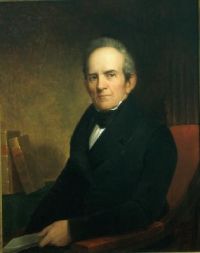
Portrait of Smith Thompson Smith Thompson Wallace v. M'Connell/Opinion of the Court…

The acceptor of a bill stands in the same relation to the drawee, as the maker of a note does to the payee; and the acceptor is the principal debtor, in the case of a bill, precisely like the maker of a note. The liability of the acceptor grows out of, and is to be governed by the terms of his acceptance, and the liability of the maker of a note grows out of, and is to be governed by the terms of his note; and the place of payment can be of no more importance in the one case than in the other.
Source: Wikisource

Portrait of Smith Thompson Smith Thompson Wallace v. M'Connell/Opinion of the Court…

It was, however, decided that if a bill of exchange is accepted, payable at a particular place, the declaration in an action on such bill against the acceptor, must aver presentment at that place, and the averment must be proved. The Lord Chancellor, in stating the question, said this was a very fit question to be brought before the House of Lords, because the state of the law, as actually administered in the Courts, is such, that it would be infinitely better to settle it in any way than to permit so controversial a state to exist any longer.
Source: Wikisource

Portrait of Smith Thompson Smith Thompson Wallace v. M'Connell/Opinion of the Court…

The attaching creditor would, in such case, require a lien upon the debt, binding upon the defendant, and which the Courts of all other governments, if they recognise such proceedings at all, could not fail to regard. If this doctrine be well founded, the priority of suit will determine the right. The rule must be reciprocal; and where the suit in one Court is commenced prior to the institution of proceedings under attachment in another Court, such proceedings cannot arrest the suit
Source: Wikisource

Get perspective with Kwize: daily news enlightened by great literature