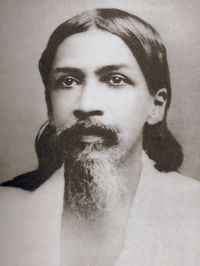
Sri Aurobindo

Sri Aurobindo

Summary

Portrait of Sri Aurobindo Sri Aurobindo The Strength of Stillness (1910)

The activity of the mind must cease, the chitta be purified, a silence fall upon the restlessness of Prakriti, then in that calm, in that voiceless stillness illumination comes upon the mind, error begins to fall away and, so long as desire does not stir again, clarity establishes itself in the higher stratum of the consciousness compelling peace and joy in the lower. Right knowledge becomes the infallible source of right action.
Source: Wikisource

Portrait of Sri Aurobindo Sri Aurobindo The Strength of Stillness (1910)

There are two great forces in the universe, silence and speech. Silence prepares, speech creates. Silence acts, speech gives the impulse to action. Silence compels, speech persuades. The immense and inscrutable processes of the world all perfect themselves within, in a deep and august silence, covered by a noisy and misleading surface of sound — the stir of innumerable waves above, the fathomless resistless mass of the ocean's waters below. Men see the waves, they hear the rumour and the thousand voices and by these they judge the course of the future and the heart of God's intention
Source: Wikisource

Portrait of Sri Aurobindo Sri Aurobindo The Strength of Stillness (1910)

The knowledge of the Yogin is not the knowledge of the average desire-driven mind. Neither is it the knowledge of the scientific or of the worldly-wise reason which anchors itself on surface facts and leans upon experience and probability. The Yogin knows God's way of working and is aware that the improbable often happens, that facts mislead. He rises above reason to that direct and illuminated knowledge which we call vijñanam. The desire-driven mind is emmeshed in the intricate tangle of good and evil, of the pleasant and the unpleasant, of happiness and misfortune.
Source: Wikisource

Get perspective with Kwize: daily news enlightened by great literature