Summary

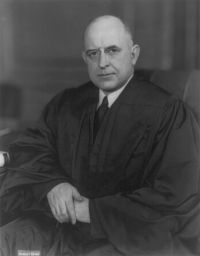
Portrait of Stanley Forman Reed Stanley Forman Reed Affronti v. United States — Opinion of the Court

We note the argument that since Congress has authorized the sentencing court to limit probation to less than all of the terms of a cumulative sentence, [14] it should follow that the probation powers for each term exist until that term is begun. But the power to limit a grant of probation to less than an entire cumulative sentence does not compel a conclusion that the power to grant probation as to each of the separate sentences exists until the convict begins to serve each.
Source: Wikisource

Portrait of Stanley Forman Reed Stanley Forman Reed Affronti v. United States — Opinion of the Court

We think not. The Murray opinion points out that it is unlikely that Congress would have found it wise to make probation apply in such a way as to unnecessarily overlap the parole and executive-clemency provisions of the law. Federal judicial power to permit probation springs solely from legislative action. Ex parte United States, supra. The authority to put a convict on probation for an uncommenced term, after service of an earlier term has begun, has not been clearly given.
Source: Wikisource

Get perspective with Kwize: daily news enlightened by great literature