Summary

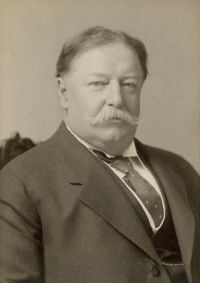
Portrait of William Howard Taft William Howard Taft United States v. Murray Cook — Opinion of the Court

The avoidance of imprisonment at time of sentence was therefore the period to which the advocates of a Probation Act always directed their urgency. Probation was not sought to shorten the term. Probation is the attempted saving of a man who has taken one wrong step, and whom the judge thinks to be a brand who can be plucked from the burning at the time of the imposition of the sentence. The beginning of the service of the sentence in a criminal case ends the power of the court even in the same term to change it.
Source: Wikisource

Portrait of William Howard Taft William Howard Taft United States v. Murray Cook — Opinion of the Court

By the Act of June 21, 1902, c. 1140, 32 Stat. 397, § 1 (18 USCA § 710) every person convicted of an offense against the United States and confined in the penitentiary or jail for a definite term, having faithfully observed all the rules, becomes entitled to a deduction of five days for each month of the first year of his imprisonment, and for the period between one year and three, of six days, and increasing allowance therefor until it reaches ten days, for each month in a sentence of ten years or more.
Source: Wikisource

Portrait of William Howard Taft William Howard Taft United States v. Murray Cook — Opinion of the Court

Under the parole law the defendant must be committed and serve at least one-third of the sentence in full. This usually means six months sentence and always means the branding of the delinquent as a convict and taking him away from his environment and associates in disgrace. The result of long experience with the probation system shows that it is far easier to reclaim an unhardened early offender without commitment to a prison than after it.
Source: Wikisource

Get perspective with Kwize: daily news enlightened by great literature