Summary

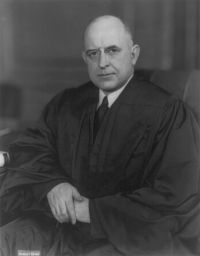
Portrait of Stanley Forman Reed Stanley Forman Reed,  Bindczyck v. Finucane — Dissent

“ When we consider that Congress was concerned with preventing fraud and illegal practices in naturalization, the Court's conclusion does not seem justified. It disregards well-established principles of statutory construction, without furthering the congressional purpose, and puts a useless burden on the Government without any ultimate benefit to the naturalized citizen. ”
Source: Wikisource

Portrait of Stanley Forman Reed Stanley Forman Reed,  Bindczyck v. Finucane — Dissent

“ The certainty that naturalization may be revoked by appeal determines another point. There is a suggestion in the Court's opinion, not elaborated, that Congress intended to bar state action for rehearing or vacation during term on facts dehors the record because to do otherwise 'would gratuitously abandon the constitutional mandate to establish 'an uniform Rule of Naturalization." To allow procedure to be determined according to the particular court that the alien might utilize would not violate the principle of uniformity. ”
Source: Wikisource

Portrait of Stanley Forman Reed Stanley Forman Reed,  Bindczyck v. Finucane — Dissent

“ That body may also, we assume, put limits on state court powers concerning federal rights. When Congress grants concurrent jurisdiction over federal matters, however, such a grant of power is to be exercised in accordance with the normal practices and procedure of the respective courts unless specifically or by necessary implication the federal legislation requires such limitation. [3]
We have had provisions for naturalization since March 26, 1790. [4] They have grown in complexity through the years.
”
Source: Wikisource

Get perspective with Kwize: daily news enlightened by great literature