Summary

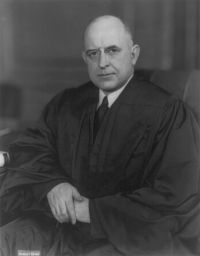
Portrait of Stanley Forman Reed Stanley Forman Reed Carolene Products Company v. United States…

Congress evidently determined that exclusion from commerce of filled milk compounds in the semblance of milk was an appropriate method to strike at evils which it desired to suppress. Although it now is made to appear that one evil, the nutritional deficiencies, has been overcome, the evil of confusion remains and Congress has left the statute in effect.
Source: Wikisource

Portrait of Stanley Forman Reed Stanley Forman Reed Carolene Products Company v. United States…

As a basis for petitioner's position that the Filled Milk Act does not cover their compounds, it is argued that the nutritional deficiencies of filled milks led to the Act's enactment so as to protect the public health. These deficiencies occurred because the extraction of the butterfat from the whole milk removed a large proportion of the fat soluble vitamins A and D. The hearings on the bill and the course of the debate make it quite clear that this vitamin deficiency was of major importance in bringing about the enactment of the act.
Source: Wikisource

Portrait of Stanley Forman Reed Stanley Forman Reed Carolene Products Company v. United States…

In dealing with the evils of filled milk, Congress reached the conclusion that labeling was not an adequate remedy for deception. On the point of the constitutionality in relation to due process of the prohibition of trade in articles which are not in themselves dangerous but which make other evils more difficult to control, such as confusion in the filled milk legislation, the Powell case is authority for the validity of Congressional action in the Filled Milk Act. It involved a sale of an article assumed to be just as good as butter but which was prohibited because of its ingredients.
Source: Wikisource

Get perspective with Kwize: daily news enlightened by great literature