Summary

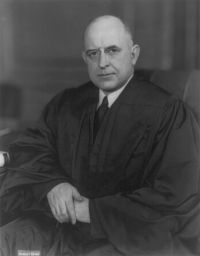
Portrait of Stanley Forman Reed Stanley Forman Reed Ford Motor Company v. Beauchamp…

We reject petitioner's contention that constitutionality of state taxation turns on so narrow an issue as whether local assets rather than local gross receipts are used in a taxing formula.
In a unitary enterprise, property outside the state, when correlated in use with property within the state, necessarily affects the worth of the privilege within the state. Financial power inherent in the possession of assets may be applied, with flexibility, at whatever point within or without the state the managers of the business may determine.
Source: Wikisource

Portrait of Stanley Forman Reed Stanley Forman Reed Ford Motor Company v. Beauchamp…

The question for determination in this proceeding is the validity, as applied to this petitioner, of a statute of the State of Texas levying an annual franchise tax on all corporations chartered or authorized to do business in Texas, measured by a graduated charge upon such proportion of the outstanding capital stock, surplus and undivided profits of the corporation, plus its long term obligations, as the gross receipts of its Texas business bear to the total gross receipts from its entire business.
Source: Wikisource

Portrait of Stanley Forman Reed Stanley Forman Reed Ford Motor Company v. Beauchamp…

It is obviously payment for the privilege of carrying on business in Texas. [4] There is no question but that the State has the power to make a charge against domestic or foreign corporations for the opportunity to transact this intrastate business. [5] The exploitation by foreign corporations of intrastate opportunities under the protection and encouragement of local government offers a basis for taxation as unrestricted as that for domestic corporations. In laying a local privilege tax, the state sovereignty may place a charge upon that privilege for the protection afforded.
Source: Wikisource

Get perspective with Kwize: daily news enlightened by great literature