Summary

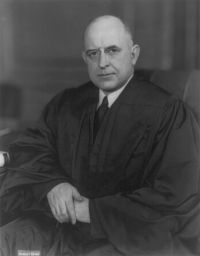
Portrait of Stanley Forman Reed Stanley Forman Reed Higgins v. Commissioner of Internal Revenue…

The Commissioner and the Board appraised the evidence here as insufficient to establish petitioner's activities as those of carrying on a business. The petitioner merely kept records and collected interest and dividends from his securities, through managerial attention for his investments. No matter how large the estate or how continuous or extended the work required may be, such facts are not sufficient as a matter of law to permit the courts to reverse the decision of the Board.
Source: Wikisource

Portrait of Stanley Forman Reed Stanley Forman Reed Higgins v. Commissioner of Internal Revenue…

Petitioner urges that the 'elements of continuity, constant repetition, regularity and extent' differentiate his activities from the occasional like actions of the small investor. His activity is and the occasional action is not 'carrying on business.' On the other hand, the respondent urges that 'mere personal investment activities never constitute carrying on a trade or business, no matter how much of one's time or of one's employees' time they may occupy.'
Since the first income tax act, the provisions authorizing business deductions have varied only slightly.
Source: Wikisource

Portrait of Stanley Forman Reed Stanley Forman Reed Higgins v. Commissioner of Internal Revenue…

Petitioner relies strongly on the definition of business in Flint v. Stone Tracy Company: [19] "Business' is a very comprehensive term and embraces everything about which a person can be employed.' This definition was given in considering whether certain corporations came under the Corporation Tax law which levies a tax on corporations engaged in business. The immediate issue was whether corporations engaged principally in the 'holding and management of real estate' [20] were subject to the act.
Source: Wikisource

Get perspective with Kwize: daily news enlightened by great literature