Summary

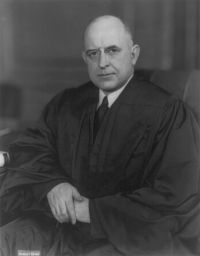
Portrait of Stanley Forman Reed Stanley Forman Reed,  Interstate Oil Pipe Line Company v…

“ So long as a tax on the privilege of doing interstate business or a tax on the doing of that business is prohibited, interstate commerce remains free from state exactions levied on that commerce. Yet that commerce must bear like intrastate commerce the cost of those facilities or protections apart from the interstate commerce itself which the state furnishes or allows within its borders. Such as been and is the freedom that the commerce clause grants to those engaged in commerce between the states. ”
Source: Wikisource

Portrait of Stanley Forman Reed Stanley Forman Reed,  Interstate Oil Pipe Line Company v…

“ The gross receipts from interstate commerce are the costs of carriage from point of origin the field tanks-to the point of destination-the out-of-state refinery. As only that portion of the costs covering the carriage from origin to pipe-line loading racks, both points in Mississippi, is used to measure the privilege tax, it is clear that the interstate gross receipts are apportioned to carriage wholly within the state. ”
Source: Wikisource

Portrait of Stanley Forman Reed Stanley Forman Reed,  Interstate Oil Pipe Line Company v…

“ We have held that shipping instructions, given to a freight conductor on a common carrier prior to any movement, put a car into interstate commerce [12] when the instructions were for shipment to an out-of-state destination after a preliminary transit between points in the state of loading. When a shipper delivers his commodity to a common carrier with instructions for billing by such carrier without purposeful delay via another or other common carriers to an out-of-state destination, we think interstate commerce has begun. ”
Source: Wikisource

Get perspective with Kwize: daily news enlightened by great literature