Summary

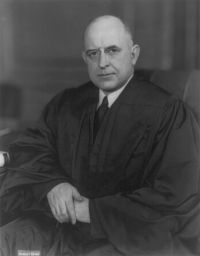
Portrait of Stanley Forman Reed Stanley Forman Reed Pennsylvania Company v. O'Rourke…

As was pointed out:
'The definition (§ 903 (a) ) is manifestly broad enough to embrace a railroad company, provided it has employees who 'are employed in maritime employment, in whole or in part, upon the navigable waters of the United States'. * * * From the standpoint of maritime employment, it obviously makes no difference whether the freight is placed in the hold or on the deck of a vessel, or whether the vessel is a car float or a steamship. A car float in navigable waters is subject to the maritime law like any other vessel.' 281 U.S. at pages 132 and 134, 50 S.Ct.
Source: Wikisource

Portrait of Stanley Forman Reed Stanley Forman Reed Pennsylvania Company v. O'Rourke…

The statute applies, by its own terms, to accidents on navigable waters when the employer has any employees engaged in maritime service. The portions of the Nogueira opinion quoted bring this railroad company within this category, since its car float operations are there held to be maritime, as they obviously are. Whether the injury occurred to an employee loading freight into cars on the float, as in the Nogueira case, or to one like respondent moving loaded cars from a float could make no difference.
Source: Wikisource

Portrait of Stanley Forman Reed Stanley Forman Reed Pennsylvania Company v. O'Rourke…

Those we collect in the margin deal with various types of construction and service workers, obviously not themselves engaged in traditional 'maritime employment,' if one were to look solely to the particular type of job they were engaged for. [7] Each was held to fall within the scope of the statute. Section 902 (4) requires the employer to pay compensation if he has 'any' employees so engaged.
Source: Wikisource

Get perspective with Kwize: daily news enlightened by great literature