Summary

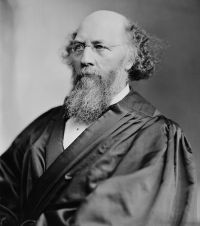
Portrait of Stephen Johnson Field Stephen Johnson Field Bardon v. Northern Pacific Railroad Company…

It is thus seen that when the grant to the Northern Pacific Railroad Company was made, on the 2d of July, 1864, the premises in controversy had been taken up on the pre-emption claim of Robinson, and that the pre-emption entry made was uncanceled; that by such pre-emption entry the land was not at the time a part of the public lands; and that no interest therein passed to that company. The grant is of alternate sections of public land, and by 'public land,' as it has been long settled, is meant such land as is open to sale or other disposition under general laws.
Source: Wikisource

Portrait of Stephen Johnson Field Stephen Johnson Field Bardon v. Northern Pacific Railroad Company…

Railroad Co., 119 U.S. 55, 7 Sup. Ct. Rep. 100, a portion of the land granted was in the occupation of certain Indian tribes, and the act provided that the United States should extinguish, as rapidly as might be consistent with public policy and the welfare of the Indians, their title to all lands falling under the operation of the act, and acquired in the donation to the road,-a provision which distinguished the grant from the one in the Leavenworth Case.
Source: Wikisource

Portrait of Stephen Johnson Field Stephen Johnson Field Bardon v. Northern Pacific Railroad Company…

All land, to which any claims or rights of others have attached, does not fall within the designation of 'public land.' The statute also says that whenever, prior to the definite location of the route of the road, and of course prior to the grant made, any of the lands which would otherwise fall within it have been granted, sold, reserved, occupied by homestead settlers, or pre-empted or otherwise disposed of, other lands are to be selected in lieu thereof, under the direction of the secretary of the interior.
Source: Wikisource

Get perspective with Kwize: daily news enlightened by great literature