Summary

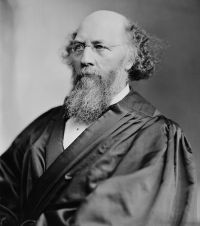
Portrait of Stephen Johnson Field Stephen Johnson Field Webber v. Virginia — Opinion of the Court

Congress never intended that the patent laws should displace the police powers of the States, meaning by that term those powers by which the health, good order, peace, and general welfare of the community are promoted. Whatever rights are secured to inventors must be enjoyed in subordination to this general authority of the State over all property within its limits.
Source: Wikisource

Portrait of Stephen Johnson Field Stephen Johnson Field Webber v. Virginia — Opinion of the Court

The patent for a dynamite powder does not prevent the State from prescribing the conditions of its manufacture, storage, and sale, so as to protect the community from the danger of explosion. A patent for the manufacture and sale of a deadly poison does not lessen the right of the State to control its handling and use. The legislation respecting the articles which the State may adopt after the patents have expired, it may equally adopt during their continuance. It is only the right to the invention or discovery the incorporeal right-which the State cannot interfere with.
Source: Wikisource

Portrait of Stephen Johnson Field Stephen Johnson Field Webber v. Virginia — Opinion of the Court

Sales by manufacturers are chiefly effected through agents. A tax upon their agents when thus engaged is, therefore, a tax upon them, and if this is made to depend upon the foreign character of the articles, that is, upon their having been manufactured without the State, it is to that extent a regulation of commerce in the articles between the States. It matters not whether the tax be laid directly upon the articles sold or in the form of licenses for their sale.
Source: Wikisource

Get perspective with Kwize: daily news enlightened by great literature