Summary

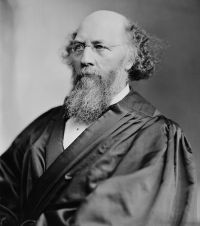
Portrait of Stephen Johnson Field Stephen Johnson Field Windsor v. McVeigh — Opinion of the Court

A service set aside is never service by which a judgment in the action can be upheld.
The doctrine invoked by counsel, that, where a court has once acquired jurisdiction, it has a right to decide every question which arises in the cause, and its judgment, however erroneous, cannot be collaterally assailed, is undoubtedly correct as a general proposition, but, like all general propositions, is subject to many qualifications in its application.
Source: Wikisource

Portrait of Stephen Johnson Field Stephen Johnson Field Windsor v. McVeigh — Opinion of the Court

If a seizure is made and condemnation is passed without the allegation of any specific cause of forfeiture or offence, and without any public notice of the proceedings, so that the parties in interest have no opportunity of appearing and making a defence, the sentence is not so much a judicial sentence as an arbitrary sovereign edict.
Source: Wikisource

Portrait of Stephen Johnson Field Stephen Johnson Field Windsor v. McVeigh — Opinion of the Court

A sentence of a court pronounced against a party without hearing him, or giving him an opportunity to be heard, is not a judicial determination of his rights, and is not entitled to respect in any other tribunal.
That there must be notice to a party of some kind, actual or constructive, to a valid judgment affecting his rights, is admitted. Until notice is given, the court has no jurisdiction in any case to proceed to judgment, whatever its authority may be, by the law of its organization, over the subject-matter.
Source: Wikisource

Get perspective with Kwize: daily news enlightened by great literature