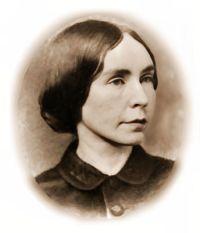
Susan E. Wallace

Susan E. Wallace

Ginevra (1886)

Summary

Portrait of Susan E. Wallace Susan E. Wallace Ginevra (1886)

Slowly, slowly, days, weeks, and months, went by; and yet the Baron and Lovel searched the castle, now gloomy as a prison. They broke the ice and had the moat dragged; but there were found only the slimy things that swim in still water, and Ban went to the bottom of a deep well in the lowest cellar, and found nothing; nor, from that fatal hour, could anything be guessed, save that Ginevra was not.
Spring came, with birds across the sea; the home wind, the sweet breath of summer brought lilies and violets; the nightingale sang to the roses; but its song could not reach the ear of Ginevra.
Source: Gutenberg

Portrait of Susan E. Wallace Susan E. Wallace Ginevra (1886)

The wedding guests turned to go, and then the great bell in the tower struck one. There was silence deep as death. Hark! two, three, four; it rang to seventeen. What could it be?
No one inhabited the bell-tower, and, except under orders, the ropes were never touched. That sound, so dread, so solemn, struck on every ear, like a voice from heights beyond the living earth; the cry of some desolate soul passing through cloudy spaces, the dim region between two worlds. Could it be fairy hands tolling the passing bell for the soul of Ginevra?
Source: Gutenberg

Portrait of Susan E. Wallace Susan E. Wallace Ginevra (1886)

The sentinel on the bridge said he would rather fight the infidel all day than venture into the forest after sundown. Close to its edge, in the shade of giant oaks, was a fountain of marble, with water playing night and day, cold as ice, clear as glass. And here, one summer afternoon, Ginevra strayed with Geta. Her feet scarcely bent the daisies in her path; the breeze tossed her flossy locks, where the red rose shone like a jewel; and, as old Ban stalked behind her, like a tall black shadow, he thought he had never seen his Lady so lovely.
Source: Gutenberg

Get perspective with Kwize: daily news enlightened by great literature