Summary

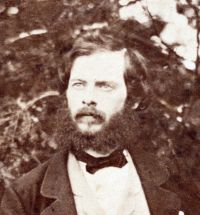
Portrait of Theodore Winthrop Theodore Winthrop John Brent — Chapter XXX. London

Why do you not suggest to him to become a professed repairer of mankind?”
“I have suggested it. He says he must take his own way. Besides, mechanics can hardly spare him. Many of my own inventions would have stayed in embryo in my brain, if Padiham had not played Vulcan, and split a passage for them. I talk over my schemes to him; he catches the idea and puts it into form at once.”
“You interest me very much,” said I. “I must see the man and know him, for my own sake as well as for Short’s Cut-off.”
Source: Wikisource

Portrait of Theodore Winthrop Theodore Winthrop John Brent — Chapter XXX. London

I want some more models made of these valves and machinery, to illustrate their action.”
“You must go to Padiham, the best artisan I know in all England.”
“Worth seeing for himself, as the man whom you name best among these millions of craftsmen.”
“Padiham is the man.’’
“He ought to have name and fame.”
“He might if he chose.”
“Worth knowing, again, for this rare abnegation.”
“He is an oddity. Some unlucky mode of life stunted him, mind and body, until he was a mature man. He is dwarfed in person, and fancies his mind suffers too.
Source: Wikisource

Portrait of Theodore Winthrop Theodore Winthrop John Brent — Chapter XXX. London

London Short’s Cut-off shut out all oilier subjects from my head next morning.
It was an innovation, a revolution. Mankind objects to both. It came from America, and though America has given tobacco, woman’s rights, the potato, model yachts, model States, and trotting horses to the Old World, that World still distrusts our work as boyish. We in turn deem the Old World a mere child, and our youth based on a completer maturity than they will attain for half a millennium.
Source: Wikisource

Get perspective with Kwize: daily news enlightened by great literature