Summary

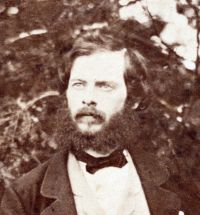
Portrait of Theodore Winthrop Theodore Winthrop The Canoe and the Saddle — Chapter VII

Tacoma was so white and glittering, that it seemed to stare at him very terribly and mockingly, and to know his shameful avarice, and how it led him to take from starving women their cherished lip and nose jewels of hiaqua, and to give them in return only tough scraps of dried elk-meat and salmon. When men are shabby, mean, and grasping, they feel reproached for their grovelling lives by the unearthliness of nature’s beautiful objects, and they hate flowers, and sunsets, mountains, and the quiet stars of heaven.
Source: Wikisource

Portrait of Theodore Winthrop Theodore Winthrop The Canoe and the Saddle — Chapter VII

Another region, worthy of any mountain’s beholding, Tacoma sees, somewhat vague and dim in distance: it sees the sweet Arcadian valley of the Willamette, charming with meadow, park, and grove. In no older world where men have, in all their happiest moods, recreated themselves for generations in taming earth to orderly beauty, have they achieved a fairer garden than Nature’s simple labor of love has made there, giving to rough pioneers the blessings and the possible education of refined and finished landscape, in the presence of landscape strong, savage, and majestic.
Source: Wikisource

Portrait of Theodore Winthrop Theodore Winthrop The Canoe and the Saddle — Chapter VII

Hiaqua and wealth seemed to have lost their charms for him. Tacoma, shining like gold and silver and precious stones of gayest lustre, seemed a benign comrade and friend. All the outer world was cheerful and satisfying. He thought he had never awakened to a fresher morning. He was a young man again, except for that unusual stiffness and unmelodious creaking in his joints. He felt no apprehension of any presence of a deputy tamanoüs, sent by Tamanoüs to do malignities upon him in the lonely wood.
Source: Wikisource

Get perspective with Kwize: daily news enlightened by great literature