Arbutus

Definition and stakes

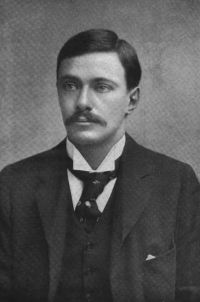
Portrait of Jean-Henri Fabre Jean-Henri Fabre,  The Life of the Caterpillar

“ Only his ravages and his poison deserve serious attention.
On the Sérignan hills, sunny heights upon which the Mediterranean vegetation comes to an end, the arbutus, or strawberry-tree, [151] abounds: a magnificent shrub, with lustrous evergreen foliage, vermilion fruit, round and fleshy as strawberries, and hanging clusters of little white bells resembling those of the lily of the valley. When the frosts come at the approach of December, nothing could be more charming than the arbutus, decking its gay verdure with both fruits and flowers, with coral balls and plump little bells.
”

Source: Gutenberg

Neltje Blanchan,  Wild Flowers

“ Trailing its spreading branches over sandy ground, rocky hillsides and steeps until it sometimes forms luxuriant mats, it closely resembles its cousin the arbutus in its manner of growth, and has been mistaken for it by at least one poet. But its tiny, rounded, urn-shaped flowers, which come in May and June, are white, not salver form and pink; the entire plant is not rusty-hairy; the dark little leathery evergreen leaves are spatulate, and, moreover, it bears small but abundant clusters of round, berry-like fruit, an attainment the arbutus still struggles for, but cannot yet reach. ”
Source: Gutenberg

Richard Folkard,  Plant Lore, Legends, and Lyrics

“ The Romans employed the Arbutus, with other symbolic trees and flowers, at the Palilia, a festival held in honour of the pastoral goddess Pales. It was a Roman custom to deposit branches of the Arbutus on coffins, and Virgil tells us that Arbutus rods and Oak twigs formed the bier of young Pallas, the son of Evander. Horace, in his Odes, has celebrated the shade afforded by the Arbutus. Ovid speaks of the tree as “the Arbutus heavy with its ruby fruit,” and tells us that, in the Golden Age, the fruit afforded food to man. ”
Source: Gutenberg

Get perspective with Kwize: daily news enlightened by great literature