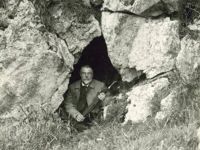
 Thomas Johnson Westropp,
Folk-Lore
(1919 (vol. 30), 1920 (vol. 31))
Thomas Johnson Westropp,
Folk-Lore
(1919 (vol. 30), 1920 (vol. 31))
“ Thence they came with Lug . . . that was the gathering of the accomplished Lug . . . the lamentation for the fair-skinned women of Fál,” [37] note the last phrase. When the gods’ sacred mounds become their tombs we feel that we are dealing with the later euhemerism of the eleventh century, for, down to A.D. 1000, the gods were freely described as “gods,” and the mounds were their palaces. To this period the Senchas na Relec belongs, and it names the mound of Lug in the great bronze-age cemetery of Brugh. ”
