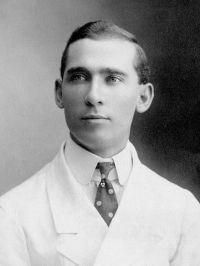
Thomas Sewall Adams

Thomas Sewall Adams

Summary

Portrait of Thomas Sewall Adams Thomas Sewall Adams 1922 Encyclopædia Britannica (1922)

The essential object of the tax was to lay a heavy tax upon “supernormal” income or profits. But to determine what constituted “normal” profits was a task of great difficulty. Where this normal profit was determined on the basis of pre-war profits, to use the words of the British Chancellor of the Exchequer, “prosperous concerns with a large pre-war profit standard might escape liability for the tax because their present profits, though high, are not in excess of their standard, and, at any rate, they pay tax on what all of us think an unduly low scale.”
Source: Wikisource

Portrait of Thomas Sewall Adams Thomas Sewall Adams 1922 Encyclopædia Britannica (1922)

Although the duty proved invaluable as a means of producing revenue, experience showed that a tax of this character (i.e. one which has regard to the profits of a particular period as a standard) is one which is only suitable for adoption as a temporary measure in times of emergency. Where the circumstances are such that increased profits are being made by any considerable section of the community, an excess profits duty is certainly a most useful expedient for raising money quickly from those who are able to pay.
Source: Wikisource

Portrait of Thomas Sewall Adams Thomas Sewall Adams 1922 Encyclopædia Britannica (1922)

The American decision to ignore pre-war profits was made deliberately by the framers of the law on the grounds that a deduction based upon invested capital is simpler, better designed to serve as the basis of a permanent tax, and more equitable in that it prevents taxpayers from securing immunity from taxation during the war on the ground that they had been unusually prosperous before the war.
Source: Wikisource

Get perspective with Kwize: daily news enlightened by great literature