Summary

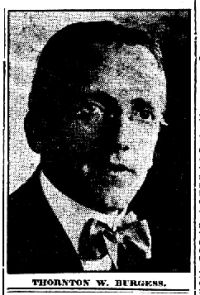
Portrait of Thornton W. Burgess Thornton W. Burgess The Adventures of Old Man Coyote

Yes, Sir, old Granny Fox had made one great mistake. You see, she had become so used to being thought the smartest and cleverest of all the little people who lived on the Green Meadows and around the Smiling Pool and in the Green Forest, that she had come to believe that there couldn't be anybody anywhere as smart and clever as she. That was because she didn't know Old Man Coyote. And now, as she and Reddy Fox watched from their hiding place the meeting between Old Man Coyote and Prickly Porky, she felt a sudden sharp sting in her pride.
Source: Gutenberg

Portrait of Thornton W. Burgess Thornton W. Burgess The Adventures of Old Man Coyote

But Old Man Coyote is wary. Oh, my, yes! He certainly is wary. To be wary, you know, is to be very, very careful where you go and what you do until you know for sure that there is no possible danger. And there is no one more wary than Old Man Coyote, not even wise, sly, old Granny Fox.
So now, though Prickly Porky, curled up in a ball in front of him, looked harmless enough except for the thousand little spears sticking out all over him, Old Man Coyote was too wary—too smart and too careful—to take any chances as Bowser the Hound had rashly done.
Source: Gutenberg

Portrait of Thornton W. Burgess Thornton W. Burgess The Adventures of Old Man Coyote

XIV. SLOW WIT AND QUICK WIT WHEN Prickly Porky the Porcupine and Old Man Coyote the Prairie Wolf met beside the Laughing Brook, it was a case of Slow Wit meeting Quick Wit. You see, Prickly Porky is very slow in everything he does, that is everything but flipping that queer tail of his about when there is an enemy near enough for it to reach. But in everything else he is oh, so slow! He walks as if he had all the time in the world to get to the place he has started for. He climbs in just the same way. And because he never moves quickly, he never thinks quickly.
Source: Gutenberg

Get perspective with Kwize: daily news enlightened by great literature