Summary

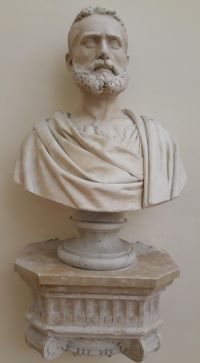
Portrait of Vitruvius Vitruvius Ten Books on Architecture — Book VIII

For however great it is, it cannot be wholesome, because, as there is no shade in the way, the intense force of the sun draws up and carries off the moisture from the flat plains with its heat, and if any water shows itself there, the lightest and purest and the delicately wholesome part of it is summoned away by the air, and dispersed to the skies, while the heaviest and the hard and unpleasant parts are left in springs that are in flat places.
Source: Wikisource

Portrait of Vitruvius Vitruvius Ten Books on Architecture — Book VIII

Earth, he held, was impregnated by the rains of heaven and, thus conceiving, brought forth the young of mankind and of all the living creatures in the world; whatever is sprung from her goes back to her again when the compelling force of time brings about a dissolution; and whatever is born of the air returns in the same way to the regions of the sky; nothing suffers annihilation, but at dissolution there is a change, and things fall back to the essential element in which they were before.
Source: Wikisource

Portrait of Vitruvius Vitruvius Ten Books on Architecture — Book VIII

Perhaps some reader of the works of Archimedes will say that there can be no true levelling by means of water, because he holds that water has not a level surface, but is of a spherical form, having its centre at the centre of the earth. Still, whether water is plane or spherical, it necessarily follows that when the straightedge is level, it will support the water evenly at its extremities on the right and left, but that if it slopes down at one end, the water at the higher end will not reach the rim of the groove in the straightedge.
Source: Wikisource

Get perspective with Kwize: daily news enlightened by great literature