Summary

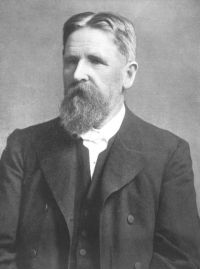
Portrait of W. H. Fitchett W. H. Fitchett The Tale of the Great Mutiny

The storm of sound grew louder, clearer, deeper. Suddenly, through the smoke and twilight, they caught a glimpse of figures on horseback, the gleam of bayonets, the white faces and red uniforms of British soldiers. An earthwork blocked the Bailey Gate itself, but the handful of men acting as the garrison of the gate, pulled hurriedly back from its ragged embrasure in the wall, to the left of the entrance, one of the guns, and through that embrasure—Outram, on his big Australian horse, leading—came the Highlanders, with Havelock and his staff; then the Sikhs; then the Fusileers.
Source: Gutenberg

Portrait of W. H. Fitchett W. H. Fitchett The Tale of the Great Mutiny

At Delhi the British, from the outset, were the besiegers, and nothing in British history—not the story of Sir Richard Grenville and the Revenge, of the Fusileers at Albuera, or of the Guards at Inkerman—is a more kindling tale of endurance and valour than the story of how for months a handful of British clung to the Ridge outside Delhi, fighting daily with foes ten times more numerous than themselves, and yet besieging—or maintaining the show of besieging—the great city which was the nerve-centre and heart of the whole Mutiny.
Source: Gutenberg

Portrait of W. H. Fitchett W. H. Fitchett The Tale of the Great Mutiny

The road itself was merely a double line of crenellated walls, inaccessible to scaling ladders, swept by grape and case-shot from every cross street, pelted by musketry from every mosque roof and palace gable, and raked from end to end with the fire of great guns. But all these elaborate and terrible defences were made useless by the fact that the British engineers tore a road for their advance through the houses to the left of the great road, until the Kaisarbagh itself was reached and seized. The whole siege, indeed, is a lesson in the value of science in war.
Source: Gutenberg

Get perspective with Kwize: daily news enlightened by great literature