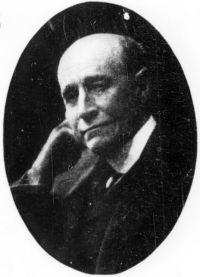
William Alexander Fraser

William Alexander Fraser

Summary

Portrait of William Alexander Fraser William Alexander Fraser,  Caste

“ Hunsa's villainy had worked out. A white rime, like a hoar frost, fretting the deep red of the scorched skin, that was as delicate as that on a woman's palm.
Sookdee muttered a pitying cry, and Hunsa declared boastfully: "When men have evil in their hearts it is known to Bhowanee; behold her sign!"
But Ajeet laughed, saying: "Let Hunsa have the iron; he, too, will know of its heat."
"Put it again in the fire," declared Sookdee, "for it is an ordeal in which only the guilty is punished; but the ball must be of the same heat."
”
Source: Gutenberg

Portrait of William Alexander Fraser William Alexander Fraser,  Caste

“ The Gulab was trembling; perhaps the decoits, led by Hunsa, had come by a shorter way; for they were like beasts of the jungle in this art of silent, swift travel.
"Sahib," she pleaded, "go from the road."
"Why, Bootea?"
"The one with the staff spoke of soldiers."
He laughed and patted her shoulder. "Don't fear, little lady," he said, "an army doesn't make war upon one, even if they are soldiers. It will be but a wedding party who now take the wife to the village of her husband."
"Not at night; and a Sahib who carries a woman upon his saddle will hear words of offence."
”
Source: Gutenberg

Portrait of William Alexander Fraser William Alexander Fraser,  Caste

“ She stopped, and he asked, "May be who, Gulab?"
"Men who will harm thee."
But Barlow lifting to the saddle passed to the road, and Bootea crumpled down in a little desolate heap of misery, her fingers thrust within her bodice, pleading with an amulet for protection for the Sahib. She prayed to her own village god to breathe mercy into the hearts of those who marched in war, and if it were the Bagrees, that Bhowanee would vouchsafe them an omen that to harm the one on a white horse would bring her wrath upon their families and their villages.
”
Source: Gutenberg

Get perspective with Kwize: daily news enlightened by great literature