Summary

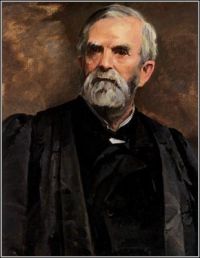
Portrait of William Burnham Woods William Burnham Woods Henderson v. Wadsworth McCarthy…

Both the wife and her heirs or assigns have the privilege of being able to exonerate themselves from the debts contracted during the marriage by renouncing the partnership or community of gains.' From these provisions of the Code it is evident that if the widow, upon the dissolution of the community by the death of her husband, fails to renounce the community of gains, which, as the law stood at the time of the death of William Henderson, was equivalent to an acceptance of the community, she became personally bound to pay one-half of the debts of the community, but no more.
Source: Wikisource

Portrait of William Burnham Woods William Burnham Woods Henderson v. Wadsworth McCarthy…

The cause of the doubt is that if he was obligated jointly with any other person than his wife without expression of solidarity, he would be considered as having bound himself only for his own proportion. Nevertheless, it is commonly held that even when the husband has bound himself jointly with his wife without expression of solidarity, he is obligated for the whole, and remains, after dissolution of the community, debtor for the whole as regards the creditor.
Source: Wikisource

Portrait of William Burnham Woods William Burnham Woods Henderson v. Wadsworth McCarthy…

Counsel for the defendant in error concede, as well they may, that Mrs. Henderson did not become bound for the debt as the heir of her husband, William Henderson. Her liability was that of widow, in community, and it was so averred in the petition filed in this case in the circuit court. The only question for decision is, therefore, was Mrs. Henderson, as the widow of William Henderson, bound in solido with Gaines & Relf, by whom the alleged acknowledgments were made, for the payment of the note of Henderson & Gaines?
Source: Wikisource

Get perspective with Kwize: daily news enlightened by great literature