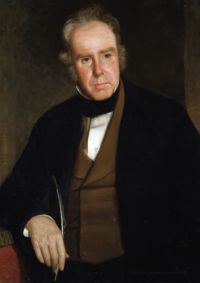
William Carleton

William Carleton

Summary

Portrait of William Carleton William Carleton Willy Reilly

No, Lanigan, I will not go; say to Reilly—say I have changed my mind; tell him that my affection for my father has overcome my love for him; say I will never marry—that my heart is his, and never will or can be another's. But then again—he, the noble-minded, the brave, the generous, the disinterested—alas! I know not what to do, Lanigan, nor how to act. If I remain here, they will strive to force this odious marriage on me; and then some fearful catastrophe will happen; for, sooner than marry Whitecraft, I would stab either him or myself. Either that, Lanigan, or I should go mad
Source: Gutenberg

Portrait of William Carleton William Carleton Willy Reilly

What a tender husband for Helen! Why, hang the fellow, he has a heart for nobody, but himself. She is at home, Sir Robert, but the truth is, I don't think it would become me, as a father anxious for the happiness of his child, and that child, an only one, to sacrifice her happiness—the happiness of her whole life—to wealth or ambition. You know she herself entertains a strong prejudice—no, that's not the word—”
“I beg your pardon, sir; that is the word; her distaste to me is a prejudice, and nothing else.”
“No, Sir Robert; it is not the word. Antipathy is the word.
Source: Gutenberg

Portrait of William Carleton William Carleton Willy Reilly

Reilly's blood, somehow, is up; and there they are looking at each other, like a pair o' game cocks, with their necks stretched out in a cockpit—when I was a boy I used to go to see them—ready to dash upon one another.”
“Are you not now suffering for your religion?” asked the prelate.
“No,” replied Reilly, “it is not for the sake of my religion that I have suffered any thing. Religion is made only a pretext for it; but it is not, in truth, on that account that I have been persecuted.”
“Pray, then, sir, may I inquire the cause of your persecution?”
Source: Gutenberg

Get perspective with Kwize: daily news enlightened by great literature