Summary

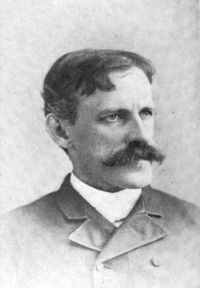
Portrait of William Elliot Griffis William Elliot Griffis The Story of New Netherland — Chapter XI: The Maker of the Silver Chain (1909)

The freight might come later, but van Curler believed in settling the farmers on the land at once. He then enlarged and developed, withal putting on an unshakable basis, the Dutch policy of peace with the Indians. Van Curler was one of the first men to perceive the true humanity of the native American and to realize his value. The Indians were so very numerous all around, that it would have been easy for them to combine and overwhelm the new settlement, but van Curler, besides being a noble character, had learned experience from the folly of the Manhattan rulers.
Source: Wikisource

Portrait of William Elliot Griffis William Elliot Griffis The Story of New Netherland — Chapter XI: The Maker of the Silver Chain (1909)

Faithful to his trust as agent of the Patroon, van Curler sometimes found matters of duty disagreeable. The rules of the Company forbade free trade in “the bush” or open forest, and in carrying out the Patroon’s orders, he came into collision with Adrian van der Donck, the first lawyer in New Netherland. “Every peasant was a trader,” as de Vries had noticed, and the Patroon’s right of monopoly must be maintained and enforced.
Source: Wikisource

Portrait of William Elliot Griffis William Elliot Griffis The Story of New Netherland — Chapter XI: The Maker of the Silver Chain (1909)

The social life of the future capital city began around and centred in the congregation, when in 1643 a church neighborhood, or parish, was created by van Curler, the commissary, and Megapolensis. The Domine at once began the study of the Mohawk dialect, which, belonging to the Iroquois family of languages, wits very different from the Mohican speech. It was hard work at first, but Virtus vim vicit, as the arms of Haarlem have it. Intellect overcame the brute force of inertia.
Source: Wikisource

Get perspective with Kwize: daily news enlightened by great literature