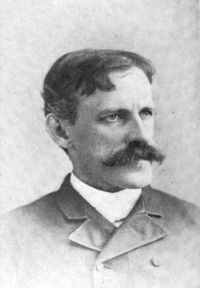
 William Elliot Griffis,
The Story of New Netherland — Chapter XII: Stuyvesant and his Rule
(1909)
William Elliot Griffis,
The Story of New Netherland — Chapter XII: Stuyvesant and his Rule
(1909)
“ Being, as the people saw him, a creature of flesh, blood, clothes, wood, and silver, he was a most picturesque personage, on which fiction and caricature have delighted to dwell. His long career, of seventeen years in the public activities of the Dutch Manhattan village and eighteen years as a private gentleman in the social life of the English city, has left an enduring impression on the metropolis. Minuit, van Twiller, and Kieft are to-day but as profiles in silhouette, while Stuyvesant’s features are clear and his portrait is familiar. Indeed, he seems to be a living person among us. ”
