Summary

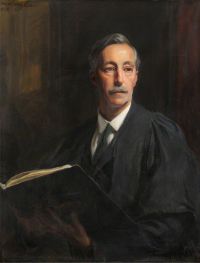
Portrait of William Fiddian Reddaway William Fiddian Reddaway Frederick the Great and the Rise of Prussia

As for Saxony itself, it is true that if war must come, which Podewils regarded as dubious, Prussia derived much strength from her possession of it. But Frederick’s treatment of Saxony removed all possibility of escaping not only from a war, but from war upon the scale that he professed to expect. The spectacle of the suffering King inflamed all his enemies. As an exile in Warsaw Augustus was a more valuable ally to Austria than he could have been in Dresden. He made it absurd for Frederick to pose as the defender of German princes against the Hapsburg.
Source: Gutenberg

Portrait of William Fiddian Reddaway William Fiddian Reddaway Frederick the Great and the Rise of Prussia

Mountains formidable though by no means impassable screened it from loyal Bohemia and loyal Moravia, and thus blocked the direct paths to Vienna. Only a few hills and streams barred an attack from the side of Saxony and no natural obstacle intervened between Breslau and Berlin. The strong portal looking towards Prussia was Glogau, which closed the Oder, the great natural highway of Silesia. Breslau, the capital, a city which Frederick could praise as the finest in Germany, was too big to be a fortress by nature and too independent to be made one by art.
Source: Gutenberg

Portrait of William Fiddian Reddaway William Fiddian Reddaway Frederick the Great and the Rise of Prussia

THE RISE OF PRUSSIA The first task of the student of Frederick’s life-story is to rid himself of the idea that the solitary King was either wholly original or wholly free. To seize Silesia, to quarter Poland, to rival Austria, to humble France, each was no doubt a feat which no Prussian ruler before him had dared to attempt. Yet in each of these, as will presently be shown, the hand of the living was at once nerved and guided by the dead.
Source: Gutenberg

Get perspective with Kwize: daily news enlightened by great literature