Summary

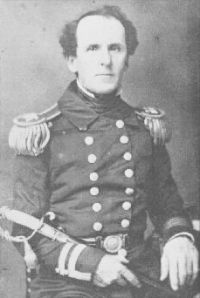
Portrait of William Francis Lynch William Francis Lynch Narrative Of The United States Expedition To The River Jordan And The Dead Sea… (1849)

At nine o’clock, when the heat of the sun began to be oppressive, they reached a low cave in the southern face of the mountain, over Wady Seyal, — a deep ravine, which separates the cliff from the main ridge on the north. Here they dismounted, as it was impossible to proceed farther on horseback. Hence, sometimes upon their hands and knees, they clambered up the steep and rugged cliff, its perpendicular side pierced with apertures, like the Rock of Gibraltar.
Source: Wikisource

Portrait of William Francis Lynch William Francis Lynch Narrative Of The United States Expedition To The River Jordan And The Dead Sea… (1849)

They were inclined to believe, that the path by which they ascended is the one which Josephus calls the “serpent, as resembling that animal in its narrowness and perpetual windings; for it is broken off at the prominent precipices of the rock, and returns frequently into itself, and, lengthening again by little and little, hath much to do to proceed forward, and he that would walk along it, must first go on one leg and then on the other; there is also nothing but destruction, in case your feet slip, for on each side there is a vastly deep chasm and precipice.”
Source: Wikisource

Portrait of William Francis Lynch William Francis Lynch Narrative Of The United States Expedition To The River Jordan And The Dead Sea… (1849)

These Arabs always express great horror at anything like wanton cruelty towards animals. And yet ’Akil looked upon the woman whose husband he had slain, without the drooping of an eyelid, or the visible relaxation of a muscle. It is for philosophers to account for this trait of humanity towards animals, in a race proverbially reckless of the lives of their fellow-creatures.
Source: Wikisource

Get perspective with Kwize: daily news enlightened by great literature