Summary

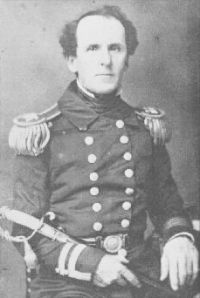
Portrait of William Francis Lynch William Francis Lynch Narrative Of The United States Expedition To The River Jordan And The Dead Sea… (1849)

The finest view of Jaffa is from the harbour. The houses are mostly one story, with flat roofs, and being built on an acclivity, the flat roofs of those on one street form terraces to the houses on the one above it; hence, at sunset, when the inhabitants were assembled on the house-tops to enjoy the breeze, they presented an animated and pleasing appearance.
Source: Wikisource

Portrait of William Francis Lynch William Francis Lynch Narrative Of The United States Expedition To The River Jordan And The Dead Sea… (1849)

The village Es Skarki, with ruins, was on a hill to the right. There was here a sycamore fig-tree, under which reclined three Armenians, officers of the customs, respectively, of Jaffa, Gaza, and Jerusalem. They were attired in shabby European costume. But the resemblance extended to a less commendable feature; they drank freely of arrack, a vile, spirituous compound. At sunset, a Muslim was seen at his prayers and prostrations on the extreme end of the castle wall.
Source: Wikisource

Portrait of William Francis Lynch William Francis Lynch Narrative Of The United States Expedition To The River Jordan And The Dead Sea… (1849)

The citadel presents a striking scene of great masses of masonry overturned, and displaying rows of dark granite columns beneath, the foundation of which was laid in what is termed cob-house fashion. All the ruins were of massive sandstone. There were Saracenic arches and three very lofty pieces of masonry — standing abutments, perhaps, of a church, or a castle. The whole area within the walls is full of pits, where hewn stones have been dug from the earth accumulated over them in the lapse of ages. There was an Arab shepherd with several hundred goats within the enclosure.
Source: Wikisource

Get perspective with Kwize: daily news enlightened by great literature