Summary

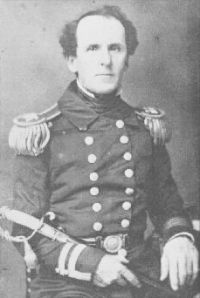
Portrait of William Francis Lynch William Francis Lynch Narrative Of The United States Expedition To The River Jordan And The Dead Sea… (1849)

Crossing over a rugged, rocky country, we descended by a precipitous road, a slope covered with bushes and shrubbery, to a dense olive grove near the village of Sarus, where we camped for the night.
The whole face of the country since leaving Jerusalem bears evidence of a high state of cultivation, and after the calcined cliffs of the Dead Sea and the utter barrenness of the desert of Judea, our senses are soothed by the soft and refreshing green of these terraced hills.
Source: Wikisource

Portrait of William Francis Lynch William Francis Lynch Narrative Of The United States Expedition To The River Jordan And The Dead Sea… (1849)

The ruling passion of an Arab is greediness of gold, which he will clutch from the unarmed stranger, or filch from an unsuspecting friend. The Indian, seeking only a trophy, as a record of his achievement, is content with the scalp of the foe he has slain in war. The Arab lurks in the crevices of the rock, and, from his covert, fires upon the peaceful traveler, that he may rifle his body of money and clothes.
Source: Wikisource

Portrait of William Francis Lynch William Francis Lynch Narrative Of The United States Expedition To The River Jordan And The Dead Sea… (1849)

It is the ambition of an Indian father to bestow his daughter on the bravest warrior of the tribe: an Arab sheikh will sell his child to the meanest fellah, if he be the highest bidder. The Arab is yet more lascivious than the Indian; and in no part of the world is the condition of woman more abject than it is in the East. The wandering Arab does not, like the wild Indian, destroy the implements of agriculture, but watches and waits, and sweeps off the fresh-gathered harvest of the laborious and timid fellahin.
Source: Wikisource

Get perspective with Kwize: daily news enlightened by great literature