Summary

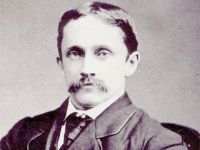
Portrait of C. R. Conder C. R. Conder Names and places in the Old and New Testament and Apocrypha… (1889)

Their border was from Mahanaim, all Bashan, all the kingdom of Og, King of Bashan, and all the towns of Jair, which are in Bashan, three score cities; and half Gilead, and Ashtaroth, and Edrei, the cities of the Kingdom of Og in Bashan, were for the children of Machir (Josh. xiii.) . And there fell ten parts to Manasseh beside the land of Gilead and Bashan, which is beyond Jordan.... And the border of Manasseh was from Asher to Michmethath, which is before Shechem; and the border went along to the right hand, unto the inhabitants of En-tappuah.
Source: Gutenberg

Portrait of C. R. Conder C. R. Conder Names and places in the Old and New Testament and Apocrypha… (1889)

The modern Arabic ‘Sahyûn’ is correct equivalent of Zion, according to Gesenius, the meaning of the word being ‘sunny,’ and a valley and ruin called Sahyûn now exists 11⁄2 miles west of the present city wall. The word Zion does not occur in the works of Josephus, the name Jerusalem [p. 187] being used instead. (Conder’s Handbook, p. 336.)
Source: Gutenberg

Portrait of C. R. Conder C. R. Conder Names and places in the Old and New Testament and Apocrypha… (1889)

REUBEN, Tribe of Josh. xiii. 15–23; Josephus 9 Ant. viii. 1 — The eastern parts of the country beyond Jordan, which belonged to the Reubenites and Gadites and to the half tribes of Manasseh. (9 Ant. viii. 1.) REZEPH 2 Kings xix. 12; Is. xxxvii. 12 Not identified Near Nisibin — There are several towns of this name in Mesopotamia. One west of the Euphrates on the road from Racca to Hŭms, the other east of the Euphrates near Bagdad; between these two rests the claim to the ancient site. (Smith’s Bible Dictionary.)
Source: Gutenberg

Get perspective with Kwize: daily news enlightened by great literature