Summary

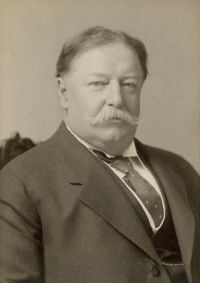
Portrait of William Howard Taft William Howard Taft Blodgett v. Silberman Silberman…

The analogy between furniture and bonds cannot be complete because bonds are representative only and are not the thing represented. They are at most choses in action and intangibles.
We think, therefore, that the Supreme Court of Errors in extending the rule of the Frick Case from tangible personal property, like paintings, furniture or cattle, to bonds, is not warranted, and to that extent we must reverse its conclusion in denying to Connecticut the right to tax the transfer of the bonds and Treasury certificates.
Source: Wikisource

Portrait of William Howard Taft William Howard Taft Blodgett v. Silberman Silberman…

The power of the state of a man's domicile to impose a tax upon the succession to, or the transfer of, his intangible property, even when the evidences of such property are outside of the state at the time of his death has been constantly asserted by the Legislatures of the various states. The Supreme Court of Errors in its opinion in this case says that at the present time the inheritance tax laws of over four-fifths of the states impose a tax similar to that imposed by Connecticut.
Source: Wikisource

Portrait of William Howard Taft William Howard Taft Blodgett v. Silberman Silberman…

The question here is whether bonds, unlike other choses in action, may have a situs different from the owner's domicile such as will render their transfer taxable in the state of that situs and in only that state. We think bonds are not thus distinguishable from other choses in action. It is not enough to show that the written or printed evidence of ownership may, by the law of the state in which they are physically present, be permitted to be taken in execution or dealt with as reaching that of which they are evidence, even without the presence of the owner.
Source: Wikisource

Get perspective with Kwize: daily news enlightened by great literature