Summary

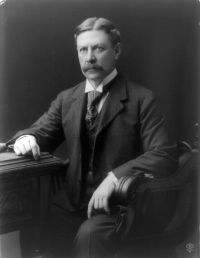
Portrait of William Henry Moody William Henry Moody Tilt v. Kelsey — Opinion of the Court

It is the duty of the sovereign to provide a tribunal, under whose direction the just demands against the estate may be determined and paid, the succession decreed, and the estate devolved to those who are found to be entitled to it. Sometimes this duty is performed by conferring jurisdiction upon a single court and sometimes by dividing the jurisdiction among two or three courts. The courts may be termed ecclesiastical, probate, orphans', surrogate, or equity courts.
Source: Wikisource

Portrait of William Henry Moody William Henry Moody Tilt v. Kelsey — Opinion of the Court

Up to this point it has been assumed that the New Jersey court had jurisdiction to probate the will and administer the estate, and what has been said upon the effect of the judicial proceedings has been based upon that assumption. When, however, full faith and credit is demanded for a judgment in the courts of other states, an inquiry into the jurisdiction is always permitted, and if it be shown that the proceedings relied upon were without the jurisdiction of the court, they need not be respected.
Source: Wikisource

Portrait of William Henry Moody William Henry Moody Tilt v. Kelsey — Opinion of the Court

The jurisdiction may be exercised exclusively in one, or divided among two or more, as the sovereign shall determine. But somewhere the power must exist to decide finally, as against the world, all questions which arise in the settlement of the succession. Mistakes may occur and sometimes do occur, but it is better that they should be endured than that, in a vain search for infallibility, questions shall remain open indefinitely.
Source: Wikisource

Get perspective with Kwize: daily news enlightened by great literature