Summary

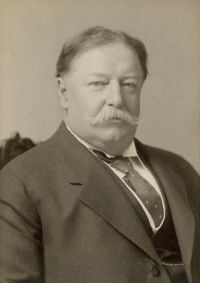
Portrait of William Howard Taft William Howard Taft Hampton Company v. United States…

The title of the Tariff Act of 1922 (42 Stat. 858) , of which section 315 is a part, is 'An act to provide revenue, to regulate commerce with foreign countries, to encourage the industries of the United States, and for other purposes.' Whatever we may think of the wisdom of a protection policy, we cannot hold it unconstitutional.
So long as the motive of Congress and the effect of its legislative action are to secure revenue for the benefit of the general government, the existence of other motives in the selection of the subjects of taxes cannot invalidate congressional action.
Source: Wikisource

Portrait of William Howard Taft William Howard Taft Hampton Company v. United States…

Congress may feel itself unable conveniently to determine exactly when its exercise of the legislative power should become effective, because dependent on future conditions, and it may leave the determination of such time to the decision of an executive, or, as often happens in matters of state legislation, it may be left to a popular vote of the residents of a district to be affected by the legislation.
Source: Wikisource

Portrait of William Howard Taft William Howard Taft Hampton Company v. United States…

If Congress were to be required to fix every rate, it would be impossible to exercise the power at all. Therefore, common sense requires that in the fixing of such rates Congress may provide a Commission, as it does, called the Interstate Commerce Commission, to fix those rates, after hearing evidence and argument concerning them from interested parties, all in accord with a general rule that Congress first lays down that rates shall be just and reasonable considering the service given and not discriminatory.
Source: Wikisource

Get perspective with Kwize: daily news enlightened by great literature