Summary

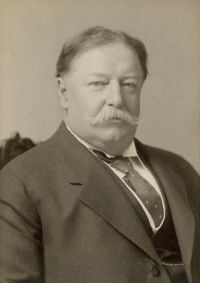
Portrait of William Howard Taft William Howard Taft Harkin v. Brundage — Opinion of the Court

The temptation of the exercise of power and patronage in the selection of receivers and the management of great businesses under the court should not be a feather's weight in prompting court action. Each court should examine with nicety the question of the right of the parties to have a receiver and should advise itself in regard to the circumstances making it its duty to exercise this delicate jurisdiction.
Source: Wikisource

Portrait of William Howard Taft William Howard Taft Harkin v. Brundage — Opinion of the Court

We do not wish what we have said to be taken as a general approval of the appointment of a receiver under the prayer of a bill brought by a simple contract creditor simply because it is consented to at the time by a defendant corporation. The true rule in equity is that under usual circumstances a creditor's bill may not be brought except by a judgment creditor after a return of 'nulla bona' on execution.
Source: Wikisource

Portrait of William Howard Taft William Howard Taft Harkin v. Brundage — Opinion of the Court

It can only be avoided by forbearance and comity, and by enforcing upon the parties and counsel engaged the utmost good faith and the fullest disclosure in one jurisdiction with reference to what are the exact facts relevant to litigation in a corresponding case in the other. This is especially true with respect to receiverships. The desire of those who represent an embarrassed corporation to seek a refuge from active and urgent creditors under the protecting arm of an officer of the court, leads to strenuous efforts to frame a case which may under equity practice justify a receiver.
Source: Wikisource

Get perspective with Kwize: daily news enlightened by great literature