Summary

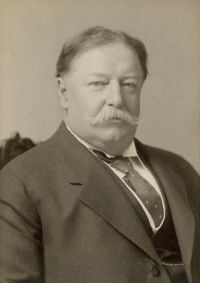
Portrait of William Howard Taft William Howard Taft Lehigh Valley Company v. Board of Public Utility Commissioners…

An increase from $200,000 to $300,000 for a railroad crossing might well, under different circumstances from those here, be regarded as so unreasonable as to make the order a violation of the company's constitutional rights and to be in the nature of confiscation. The protection of the Fourteenth Amendment in such cases is real, and is not to be lightly regarded. A railroad company, in maintaining a path of travel and transportation across a state, with frequent trains of rapidity and great momentum, must resort to reasonable precaution to avoid danger to the public.
Source: Wikisource

Portrait of William Howard Taft William Howard Taft Lehigh Valley Company v. Board of Public Utility Commissioners…

The Supreme Court said of section 38:
'If this language is taken literally, we should be powerless in any case within the jurisdiction of the board to set aside its order if there was any evidence to support it, no matter how overwhelming the evidence to the contrary might be. It is needless to say that such a literal construction of section 38 would bring it into conflict with our Constitution. It needs no act of the Legislature to confer on us the power to review the action of an inferior tribunal, and the Legislature cannot limit us in the exercise of our ancient prerogative.
Source: Wikisource

Portrait of William Howard Taft William Howard Taft Lehigh Valley Company v. Board of Public Utility Commissioners…

This court has said that, where railroad companies occupy lands in the state for use in commerce, the state has a constitutional right to insist that a highway crossing shall not be dangerous to the public, and that, where reasonable safety of the public requires abolition of grade crossings, the railroad cannot not prevent the exercise of the police power to this end by the excuse that such change would interfere with interstate commerce or lead to the bankruptcy of the railroad. Erie Railroad v. Board, 254 U.S. 394, 41 S.C.t.
Source: Wikisource

Get perspective with Kwize: daily news enlightened by great literature