Summary

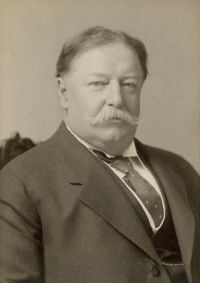
Portrait of William Howard Taft William Howard Taft Overland Motor Company v. Packard Motor Car Company…

The publications and patents represented independent work in Great Britain, and, as a result thereof, there was actual use of the subject-matter in suits abroad during the pendency of the original and divisional applications above referred to. No product embodying the subject-matter of the claims in suit appeared upon the market in the United States prior to the issuing of the patent in suit.
Source: Wikisource

Portrait of William Howard Taft William Howard Taft Overland Motor Company v. Packard Motor Car Company…

The court said:
'Neither can a party pursuing a strictly legal remedy be adjudged in the wrong if he acts within the time allowed, and pursues the method prescribed by the statute. * * * Under section 4886, Revised Statutes, an inventor has 2 years from the time his invention is disclosed to the public within which to make his application, and unless an abandonment is shown during that time he is entitled to a patent, and the patent runs as any other patent for 17 years from its date.
Source: Wikisource

Portrait of William Howard Taft William Howard Taft Overland Motor Company v. Packard Motor Car Company…

Following, then, the analogy, he finds that such a case as this may constitute res judicata in a sense, but he qualifies the statement in this important way:
'In what we have said we do not desire it to be understood that the Patent Office may not, if it thinks proper to do so, entertain and adjudicate a second application for a patent after the first application has been rejected. What we decide is, that it is not incumbent upon the office as a duty to entertain such applications, and that, if it refuses to entertain them, it has a perfect legal right so to do.
Source: Wikisource

Get perspective with Kwize: daily news enlightened by great literature