Summary

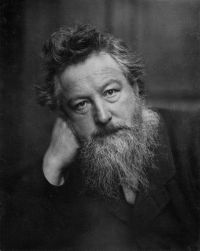
Portrait of William Morris William Morris The Earthly Paradise: A Poem (Part II)

Return, then, to thine happiness,
Nor will I love thee any less;
But watch thee as a mother might
Her child at play."
With strange delight
He stammered out, "Nay, keep thy tears
for me, and for my ruined years
Weep love, that I may love thee more,
My little hour will soon be o'er."
"Ah, love," she said, "and thou art wise
As men are, with long miseries
Buying these idle words and vain,
My foolish love, with lasting pain;
And yet, thou wouldst have died at last
If in all wisdom thou hadst passed
Thy weary life: forgive me then,
In pitying the sad life of men."
Source: Gutenberg

Portrait of William Morris William Morris The Earthly Paradise: A Poem (Part II)

For other folk to hatch new ills and care.
But on the ground sat Psyche all alone,
The lamp and knife beside her, and no moan
She made, but silent let the long hours go,
Till dark night closed around her and her woe.
Then trembling she arose, for now drew near
The time of utter loneliness and fear,
And she must think of death, who until now
Had thought of ruined life, and love brought low;
And with, that thought, tormenting doubt there came,
And images of some unheard-of shame,
Until forlorn, entrapped of gods she felt,
As though in some strange hell her spirit dwelt.
Source: Gutenberg

Portrait of William Morris William Morris The Earthly Paradise: A Poem (Part II)

For now hast thou found favour in mine eyes;
And I repent me of the misery
That in this place thou hast endured of me,
Although because of it, thy joy indeed
Shall now be more, that pleasure is thy meed."
Then bending, on the forehead did she kiss
Fair Psyche, who turned red for shame and bliss;
But Venus smiled again on her, and said,
"Go now, and bathe, and be as well arrayed
As thou shouldst be, to sit beside my son;
I think thy life on earth is well-nigh done."
Source: Gutenberg

Get perspective with Kwize: daily news enlightened by great literature