Summary

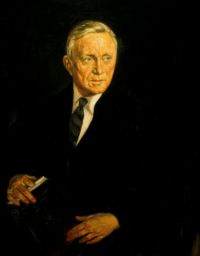
Portrait of William O. Douglas William O. Douglas Allen-Bradley Local No. 1111 v…

Viewed in that light, no conflict with the National Labor Relations Act exists.
The only employee or union conduct and activity forbidden by the state Board in this case was mass picketing, threatening employees desiring to work with physical injury or property damage, obstructing entrance to and egress from the company's factory, obstructing the streets and public roads surrounding the factory, and picketing the homes of employees. So far as the fourteen individuals are concerned, their status as employees of the company was not affected.
Source: Wikisource

Portrait of William O. Douglas William O. Douglas Allen-Bradley Local No. 1111 v…

Accordingly, the Supreme Court of Wisconsin upheld the order of the state Board stating that 'there can be no conflict between the acts until they are applied to the same labor dispute.' It was urged before that court, as it has been here, that there was nevertheless a conflict between that part of the findings of the state Board which deals with the individual appellants and the National Labor Relations Act.
Source: Wikisource

Portrait of William O. Douglas William O. Douglas Allen-Bradley Local No. 1111 v…

Since Wisconsin has applied to appellants only parts of the state Act, the conflict with the policy or mandate of the federal Act must be found in those parts. But, as we have said, the federal Act does not govern employee or union activity of the type here enjoined. And we fail to see how the inability to utilize mass picketing, threats, violence, and the other devices which were here employed impairs, dilutes, qualifies or in any respect subtracts from any of the rights guaranteed and protected by the federal Act.
Source: Wikisource

Get perspective with Kwize: daily news enlightened by great literature