Summary

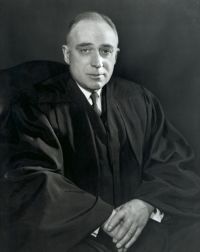
Portrait of John Marshall Harlan II John Marshall Harlan II Brotherhood of Railroad Trainmen v…

No cosmic principles announce the existence of secondary conduct, condemn it as an evil, or delimit its boundaries. These tasks were first undertaken by judges, intermixing metaphysics with their notions of social and economic policy. And the common law of labor relations has created no concept more elusive than that of 'secondary' conduct; it has drawn no lines more arbitrary, tenuous, and shifting than those separating 'primary' from 'secondary' activities. See F. Frankfurter & N. Green, The Labor Injunction 43-46, 170 (1930)
Source: Wikisource

Portrait of John Marshall Harlan II John Marshall Harlan II Brotherhood of Railroad Trainmen v…

The heart of the Railway Labor Act is the duty, imposed by § 2 First upon management and labor, 'to exert every reasonable effort to make and maintain agreements concerning rates of pay, rules, and working conditions, and to settle all disputes * * * in order to avoid any interruption to commerce or to the operation of any carrier growing out of any dispute between the carrier and the employees thereof.'
The Act provides a detailed framework to facilitate the voluntary settlement of major disputes.
Source: Wikisource

Portrait of John Marshall Harlan II John Marshall Harlan II Brotherhood of Railroad Trainmen v…

However, we conclude that the least unsatisfactory one is to allow parties who have unsuccessfully exhausted the Railway Labor Act's procedures for resolution of a major dispute to employ the full range of whatever peaceful economic power they can muster, so long as its use conflicts with no other obligation imposed by federal law. Hence, until Congress acts, picketing-whether characterized as primary or secondary-must be deemed conduct protected against state proscription.
Source: Wikisource

Get perspective with Kwize: daily news enlightened by great literature