Summary

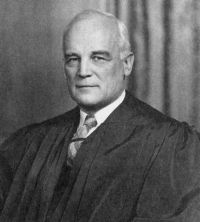
Portrait of Harold Hitz Burton Harold Hitz Burton International Brotherhood of Electrical Workers Local 501 v…

For example, the unfair labor practice described in § 8 (b) (1) is one 'to restrain or coerce' employees; in § 8 (b) (2) it is to 'cause or attempt to cause an employer'; in § 8 (b) (5) it is to 'require of employees'; and in § 8 (b) (6) it is to 'cause or attempt to cause an employer'. The scope of 'induce' and especially of 'encourage' goes beyond each of them.
c. To exempt peaceful picketing from the reach of § 8 (b) (4) would be to open the door to the customary means of enlisting the support of employees to bring economic pressure to bear on their employer.
Source: Wikisource

Portrait of Harold Hitz Burton Harold Hitz Burton International Brotherhood of Electrical Workers Local 501 v…

Because § 8 (c) is in terms limited to unfair labor practice proceedings and § 303 refers only to civil actions for damages, [8] it seems clear that § 8 (c) does not apply to an action under § 303. That section does not mention unfair labor practices through which alone the provisions of § 8 (c) can become applicable. If § 8 (c) were given the effect which petitioners urge, it would limit § 8 (b) (4) (A) so as to give the words 'induce or encourage' a meaning in that section different than they have in § 303.
Source: Wikisource

Portrait of Harold Hitz Burton Harold Hitz Burton International Brotherhood of Electrical Workers Local 501 v…

The words 'induce or encourage' are broad enough to include in them every form of influence and persuasion. [7] There is no legislative history to justify an interpretation that Congress by those terms has limited its proscription of secondary boycotting to cases where the means of inducement or encouragement amount to a 'threat of reprisal or force or promise of benefit.' Such an interpretation would give more significance to the means used than to the end sought.
Source: Wikisource

Get perspective with Kwize: daily news enlightened by great literature