Summary

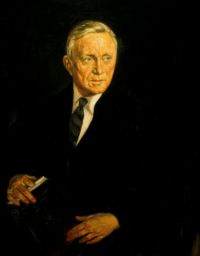
Portrait of William O. Douglas William O. Douglas Bibb v. Navajo Freight Lines, Inc…

A State which insists on a design out of line with the requirements of almost all the other States may sometimes place a great burden of delay and inconvenience on those interstate motor carriers entering or crossing its territory. Such a new safety device-out of line with the requirements of the other States-may be so compelling that the innovating State need not be the one to give way. But the present showing-balanced against the clear burden on commerce-is far too inconclusive to make this mudguard meet that test.
Source: Wikisource

Portrait of William O. Douglas William O. Douglas Bibb v. Navajo Freight Lines, Inc…

Appellants' showing was aimed at establishing that contour mudguards prevented the throwing of debris into the faces of drivers of passing cars and into the windshields of a following vehicle. They concluded that, because the Illinois statute is a reasonable exercise of the police power, a federal court is precluded from weighing the relative merits of the contour mudguard against any other kind of mudguard and must sustain the validity of the statute notwithstanding the extent of the burden it imposes on interstate commerce.
Source: Wikisource

Portrait of William O. Douglas William O. Douglas Bibb v. Navajo Freight Lines, Inc…

Of course, if the originating carrier never operated in Illinois, it would not be expected to equip its trailers with contour mudguards. Yet if an interchanged trailer of that carrier were hauled to or through Illinois, the statute would require that it contain contour guards. Since carriers which operate in and through Illinois cannot compel the originating carriers to equip their trailers with contour guards, they may be forced to cease interlining with those who do not meet the Illinois requirements. Over 60 percent of the business of 5 of the 6 plaintiffs is interline traffic.
Source: Wikisource

Get perspective with Kwize: daily news enlightened by great literature